The conversation around AI governance in many enterprises still starts with cost. Who is using Copilot? How many seats are licensed? What is the spend trajectory? How should we forecast it?
Those are reasonable questions. But they are only a small part of what governance, and security, will need to cover over the next 12 months.
The reason is simple: the thing being governed is changing.
Six months ago, “AI usage” mostly meant a developer accepting or rejecting a code suggestion. Now, it increasingly means autonomous agents reading repositories, calling external tools and APIs, modifying infrastructure, analysing enterprise data, generating outputs for users, and making multi-step decisions with limited human oversight.
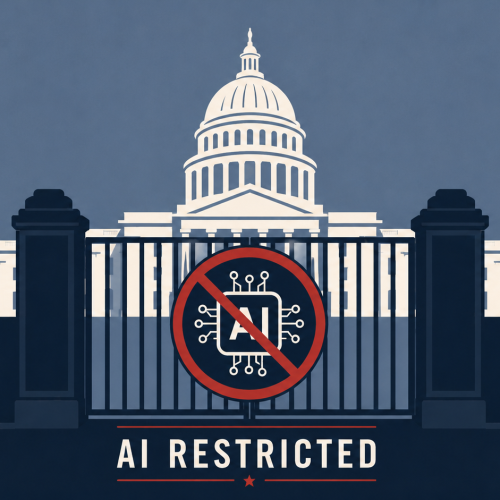
A governance model built around per-seat licensing has very little to say about an agent with tool access to a production Kubernetes cluster, sensitive customer data, or internal business systems. From a security and risk perspective, that is the more urgent gap.

From Reactive FinOps to a Strategic, Architecture-Led Control Layer
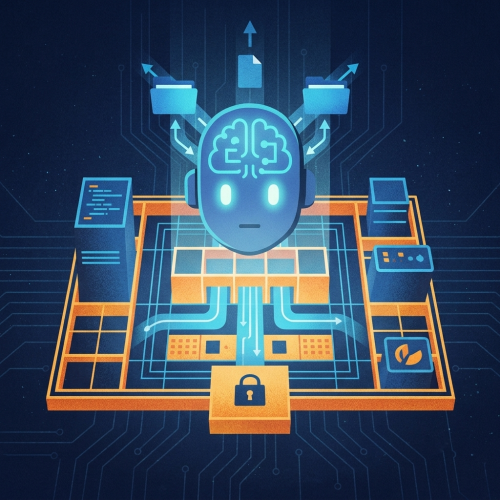
The shift we’d encourage CTOs and Heads of Engineering to make is reframing governance from a reactive cost-control function to a strategic control layer. It needs to be designed with the same intent as network segmentation, identity management, data governance, risk management, or CI/CD controls. Not added later, after agents are already running across the environment. An architecture-led control layer needs to answer questions that spend dashboards can’t, such as:
- Which agents have access to which systems, and why? As agentic tools proliferate across coding, data, and ops functions, the permission surface area grows fast. This is fundamentally an identity and access architecture problem: every agent needs a defined identity, scoped credentials, and least-privilege access, designed upfront rather than inherited by default.
- What data can agents access, produce, and learn from? Agentic AI governance also needs to cover data governance and security. This includes the data available to agents, the data produced back to users, and any data used for grounding, evaluation, training, or fine-tuning. Sensitive, regulated, confidential, and customer-identifiable data needs clear classification, access controls, masking, retention rules, and auditability. Organisations also need to understand what source data informed an agent’s output and whether that output is appropriate for the user receiving it.
- What’s the audit trail for autonomous decisions? When an agent opens a PR, modifies a config, or queries a production database, that needs to be as traceable as a human engineer’s actions, feeding into the same security monitoring and SIEM pipelines, not a separate, disconnected log.
- How should AI use cases be assessed and governed by risk? Not every AI use case carries the same level of risk. A low-impact internal productivity assistant does not require the same controls as an agent that can trigger infrastructure changes, process sensitive data, influence customer outcomes, or support regulated decisions. Use cases should be assessed based on business impact, data sensitivity, autonomy level, user group, regulatory exposure, and potential harm, with proportionate controls applied before they move into production.
- Where should human oversight and accountability sit? Responsible AI cannot just be a policy document. For agentic systems, it needs to be designed into the operating model. High-risk actions should have human-in-the-loop checkpoints, approval gates for sensitive tool calls, escalation paths when confidence is low, and clear accountability for decisions influenced or executed by agents.
- How do we evaluate and gate model and version changes? The LLM landscape moves quarterly, not annually. A new model version can change agent behaviour and risk profile in subtle ways. Without a structured evaluation, security review, responsible AI assessment, and staged rollout process, “upgrading the model” becomes an uncontrolled change to your security posture.
- What’s the policy layer that travels with the agent, not the platform? As organisations adopt agentic tools across GitHub, Azure AI Foundry, Databricks, and Claude-based workflows, governance and security policy can’t be reimplemented separately in each platform. It needs to be a consistent, blueprinted control layer where it’s defined once, enforced everywhere.
Why This Requires a Specialised, Security-Literate Skillset
This is where many organisations underestimate the work involved.
Traditional platform and security teams understand RBAC, network policy, and CI/CD gates. But agentic AI governance sits across platform engineering, security architecture, data governance, risk management, responsible AI, and applied AI/ML literacy.
It requires people who understand how agents reason, where they fail, and how those failure modes translate into practical architecture patterns. That includes reference blueprints for agent identity and access, approval gates for high-risk tool calls, data access and output controls, evaluation harnesses for model changes, risk-based use case assessment, and observability that captures agent decision traces alongside traditional security telemetry.
This is still a new discipline. In its current form, it has only really emerged over the past year. Most internal teams do not yet have the depth of capability required, not because of any failing, but because the ground has been moving too quickly to build that capability organically.
How TLC Approaches This
This thesis sits at the centre of our Agent Factory work.
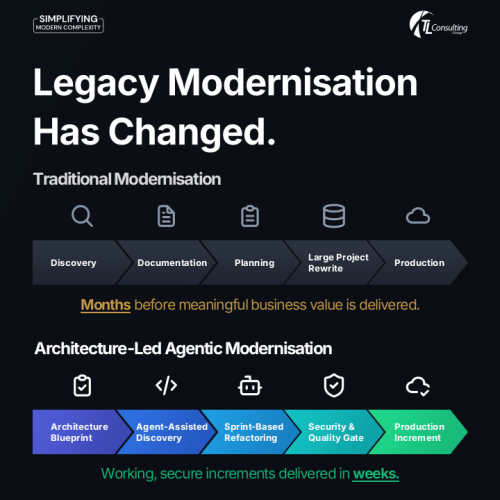
Durable value in the agentic AI era will not come from any single underlying model. Models will keep changing, improving, and being replaced. The more durable value comes from the architecture, governance, and security guardrails wrapped around them.
Models are a moving target. A well-designed, blueprinted control plane is the asset that endures and adapts as those models evolve.
Practically, this means:
- Reference architecture blueprints for agent identity, access, data governance, and tool permissions, designed before agents are deployed.
- Data security controls that govern what agents can access, what they can produce, and how data is used for grounding, evaluation, or training.
- Risk-based assessment of AI use cases, with proportionate controls based on autonomy, data sensitivity, business impact, and regulatory exposure.
- Responsible AI and human-in-the-loop patterns for high-risk actions, sensitive decisions, and low-confidence outputs.
- Evaluation and security review pipelines that gate model and version upgrades before they reach production.
- Agent observability embedded into existing security monitoring, rather than run as a separate disconnected system.
- One consistent governance and security model applied across GitHub Copilot, Azure AI Foundry, Databricks, and Claude-based agentic workflows.
For organisations that already have Copilot billing and FinOps under control, the next question is architectural. What is the blueprint governing everything else your AI agents can now do? Is it secure by design, or secure by accident? That is the conversation worth having before the agent population in your environment grows beyond your ability to govern it.
Want to put the right control plane around your AI agents before adoption scales?
Get in touch with TL Consulting Group, a GitHub Growth Partner specialising in agentic AI governance, secure AI adoption, and architecture-led control planes for enterprise engineering, data, and platform environments.