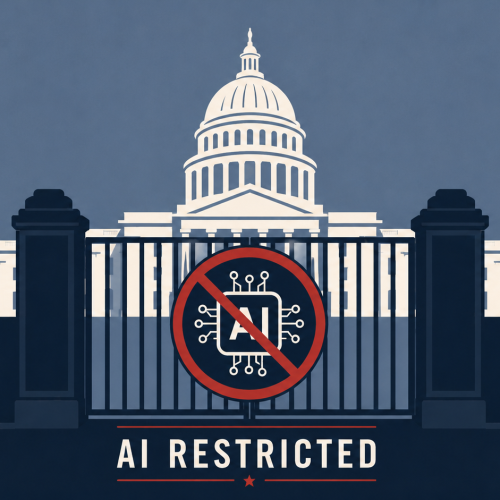
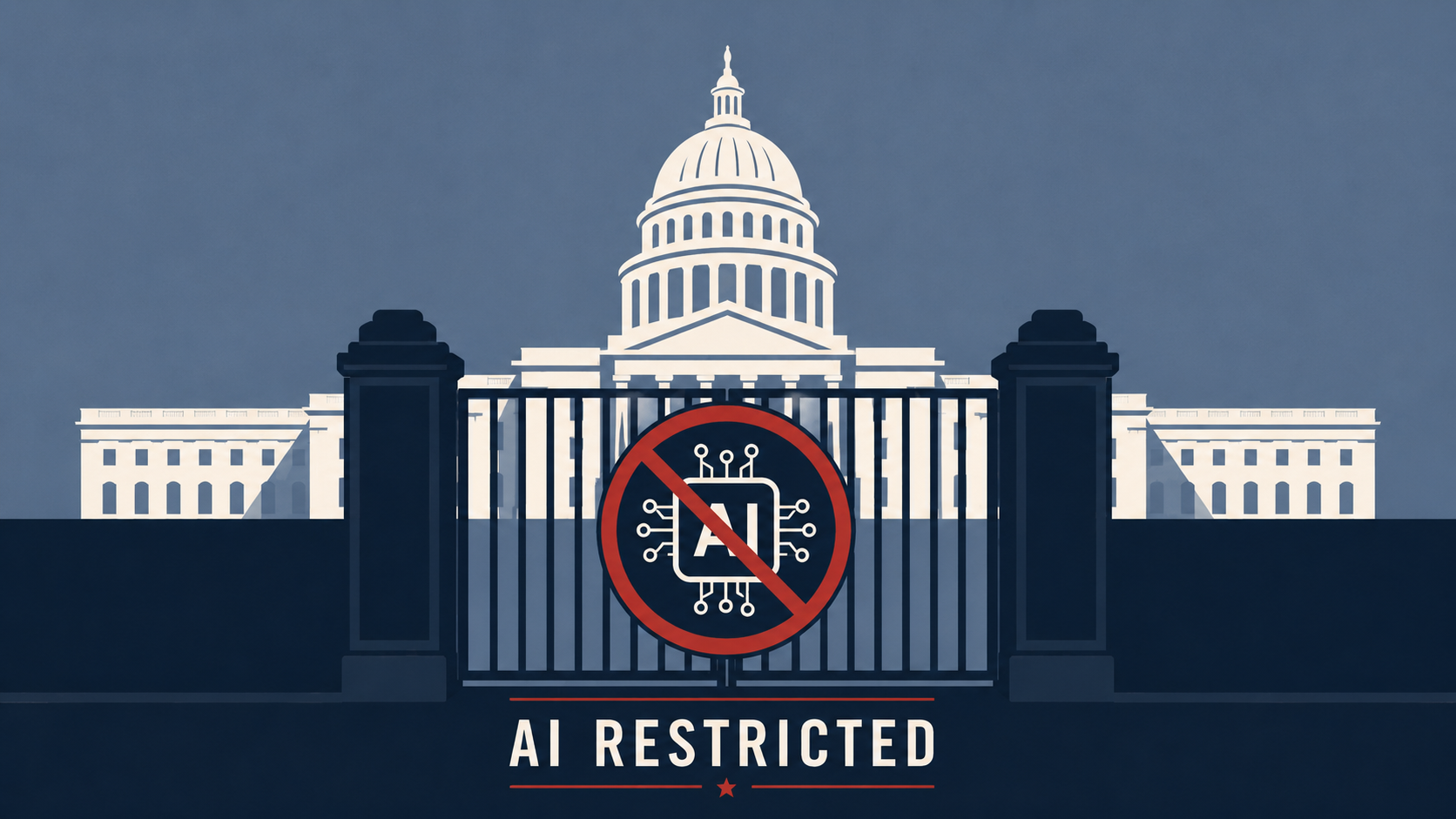
When the US government directed Anthropic to suspend access to Mythos 5 and Fable 5, most coverage centered on the national security rationale. That framing, while understandable, misses the broader significance. This was not simply a regulatory intervention targeting one company. It was a clear signal that frontier AI is being assessed through the same strategic lens governments have historically applied to semiconductors, satellite technology, and cryptographic systems: as infrastructure too consequential to be governed by market forces alone.
While the immediate focus has been on reported national security concerns surrounding the models, the broader implications extend well beyond Anthropic. The decision highlights a fundamental shift in how governments are beginning to view frontier AI systems, not merely as software products, but as strategic assets with potential economic, scientific, cybersecurity and geopolitical significance.
According to public reports, the US government directed Anthropic to suspend access to the models under national security authorities following concerns regarding advanced capabilities and the potential for misuse. Anthropic subsequently disabled access while publicly expressing disagreement with aspects of the government’s assessment. The company maintained that the identified concerns did not necessarily distinguish Mythos and Fable from other frontier AI systems available in the market.
Regardless of where one stands on the merits of the decision, the event raises important questions about the future relationship between governments, AI developers, and access to advanced technology.
When Did AI Become a National Security Asset?
For much of the past decade, the AI race has been framed primarily as a competition between technology companies. Success was measured by model performance, research breakthroughs, funding rounds, and enterprise adoption.
Today, that narrative is evolving.
AI now is being viewed through the same lens that governments have historically applied to semiconductors, cryptography, telecommunications infrastructure, and aerospace technologies. These are technologies that not only drive economic growth but also influence national competitiveness and security.
As AI capabilities advance, governments are becoming increasingly concerned with their dual-use nature. The same systems that can accelerate scientific discovery, automate software development, and improve business productivity may also enhance cyber operations, intelligence analysis, autonomous decision-making, and military applications.
Viewed from this perspective, the Anthropic decision can be interpreted as a precautionary measure. Policymakers may argue that waiting for definitive evidence of misuse is inconsistent with managing strategic technologies whose capabilities are advancing at unprecedented speed.
At the same time, critics may question whether sufficient transparency exists regarding the standards used to determine when intervention is justified. As governments become more involved in regulating frontier AI, consistency and clarity will become essential to maintain industry confidence and encourage innovation.
AI Is Becoming Critical Infrastructure
Perhaps the most significant signal emerging from this event is that frontier AI is increasingly being treated as a form of critical infrastructure.
Historically, governments have exercised greater oversight over technologies once they become strategically important. Export controls on advanced semiconductor manufacturing, restrictions on cryptographic technologies, and controls on sensitive scientific research all emerged from the recognition that some innovations carry implications beyond commercial value.
AI appears to be moving into this category.
This raises a fundamental question for technology leaders:
If AI models become strategic national assets, will access be determined by government policy rather than purely commercial availability?
For enterprises, this introduces a new layer of complexity. Evaluating an AI platform may soon involve not only technical capability, cost, and vendor support, but also geopolitical risk, regulatory exposure, and long-term access considerations.
The Potential Open-Source Effect
One of the more intriguing consequences of increased regulation may be its impact on open-source AI.
As governments place greater controls on proprietary frontier models, enterprises and governments alike may seek alternatives that provide greater transparency, flexibility, and sovereignty.
Open-weight and open-source AI ecosystems have already gained significant momentum. Unlike closed proprietary systems, these models can often be deployed within sovereign environments, audited internally, and operated without dependence on a single vendor.
This introduces a paradox:
History offers a useful comparison. In the early days of enterprise computing, proprietary software platforms dominated the landscape. Over time, technologies such as Linux, Kubernetes, and Apache became foundational components of global digital infrastructure because they offered flexibility, transparency, and reduced vendor dependence.
AI may follow a similar trajectory.
While frontier models will likely continue to lead in capability, organisations concerned about sovereignty, regulatory uncertainty, and operational control may instead look toward open-source ecosystems as a strategic complement.
The Emergence of Sovereign AI
Another trend reinforced by the Anthropic decision is the rise of sovereign AI strategies.
Around the world, governments and large enterprises are exploring how to retain greater control over AI infrastructure, data, models, and operational environments. Rather than relying exclusively on globally hosted proprietary systems, many organisations are evaluating private deployments, regional hosting arrangements, and open-source alternatives.
This could ultimately lead to the emergence of two parallel AI markets.
The first consists of frontier AI systems offering the highest levels of capability, often controlled by a small number of providers and subject to increasing regulatory oversight.
The second consists of sovereign AI ecosystems that prioritise control, transparency, compliance, and regional autonomy.
Both models will likely coexist, but the balance between them may become one of the defining technology questions of the next decade.
Looking Beyond Anthropic
The most important aspect of this story may not be Anthropic itself. Rather, it is what the decision reveals about the next phase of AI development.
The industry is entering a period where technological capability alone may no longer determine success. Policy, regulation, geopolitics, access to compute, and national interests are becoming equally important variables.
Whether history ultimately views the US government’s intervention as prudent risk management or regulatory overreach remains an open question.
What is increasingly clear, however, is that AI is no longer simply a technology market. It is becoming a strategic domain.
The next chapter of the AI race may not be defined solely by who builds the most powerful models, but by who controls access to them, who governs their use, and how nations balance innovation with security. In that sense, the Anthropic decision may represent one of the first major signals that the era of unrestricted frontier AI is beginning to give way to a new age of AI governance.
Not sure where your Data & AI gaps are?
TL Consulting Group offers a complimentary consultation to baseline your Data & AI maturity. We help identify key platform, governance, analytics and AI readiness gaps, then clarify practical next steps.